Field Notes · Act 1 — Define · 01 of 13
What I learned talking to the people at DOJO AI about "Product Engineer"
This is a first-hand account of a conversation with someone at one company, DOJO AI, read alongside what the team has written publicly. The quote is verbatim. The questions at the end are a working plan for the series, not findings. They are explored in the articles that follow, not answered here.
Observe
Signal & sourceA conversation and the team's public statements that gave this investigation its first signal.
When I started digging into what "Product Engineer" actually means, I didn't want to stop at job postings and LinkedIn posts.
Postings tell you what a company wrote down. They don't tell you what the people at that company actually look for when they talk about the work.
So I went further: I talked directly with people at a company that uses the title heavily — DOJO AI, a fast-growing AI marketing platform — and treated those conversations as a source: a conversation with the people who define this role for a living.
One of the first conversations was with someone on their team. Early on, he said something that turned out to be the most useful data point of the whole exchange:
"It's hard to find an engineer with skills beyond engineering."
I'd already read what DOJO's own team had been publicly writing about hiring, so I recognized the line immediately — it's almost verbatim what their own leadership has been saying in public.
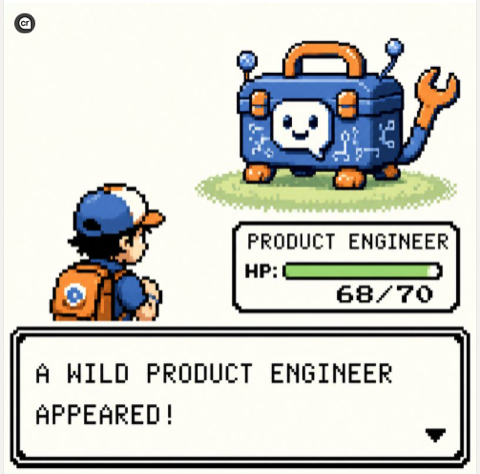
One team member had posted about searching for someone "part engineer, part product person, part designer," comparing it to finding a specific Pokémon in the wild, because most people are strong in one of those dimensions and merely tolerate the other two.
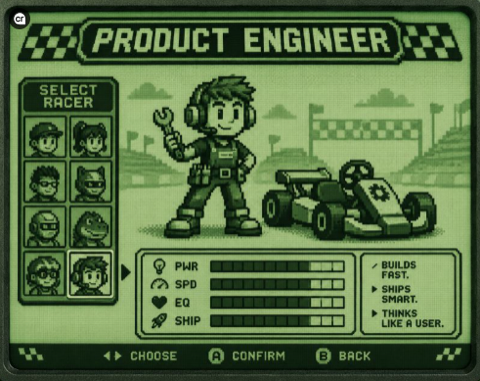
Another post used Mario Kart as the metaphor: most characters are specialists — heavy and fast, or light and nimble — but the hire they wanted was more like Mario, "not the best at anything" but "reasonably strong across every stat."
Reflect
Interpretation & limitsWhat I took from that moment, while keeping the evidence at the scale of one conversation.
That remark was more than a passing comment: it echoed, almost word for word, the team's public description of the profile they were looking for.
Taken together, the conversation and the public posts describe the same profile: an engineer who also brings product and design.
Make
The questions that guide this seriesThis slice turns one company-specific signal into the questions the rest of the series works through, in order.
Questions I want to answer
One conversation and a few public posts are a signal, not a finding. I don't know yet whether this profile, described the same way in conversation and in public, holds up across companies or is specific to how one team operates. So these are the questions I want to understand better, in the order the series takes them:
What do the people who do this work say it is?
Before counting anything, listen to practitioners and teams describe the role in their own words.What patterns repeat across them?
Which practices keep coming up, from understanding the user to learning after shipping.Do those patterns connect with the view I've been building in my career?
I've worked across design, business and technology for years, and that combination was always hard to explain while teams were organised in silos. I want to see whether what people describe now matches it, or doesn't.What does the market ask for under the title?
Job postings that carry the title "Product Engineer", read as a market signal rather than a census.How much of those postings match that picture?
Each posting read against the working definition, without treating any single answer as absolute.What do the signals mean?
What the gap between the title and the work tells engineers who want to grow into it, now that AI has changed what's worth being good at.If you're an engineer feeling the ground shift under what "good" means in your job right now, I think you'll recognize a lot of what's coming.
What a hiring team writes in the job ad is only part of what it looks for.
Field Notes is a newsletter that compares what companies write with what the people hiring actually recognize. Subscribe and get each new note by email.
Enable JavaScript to subscribe, or get in touch by email.